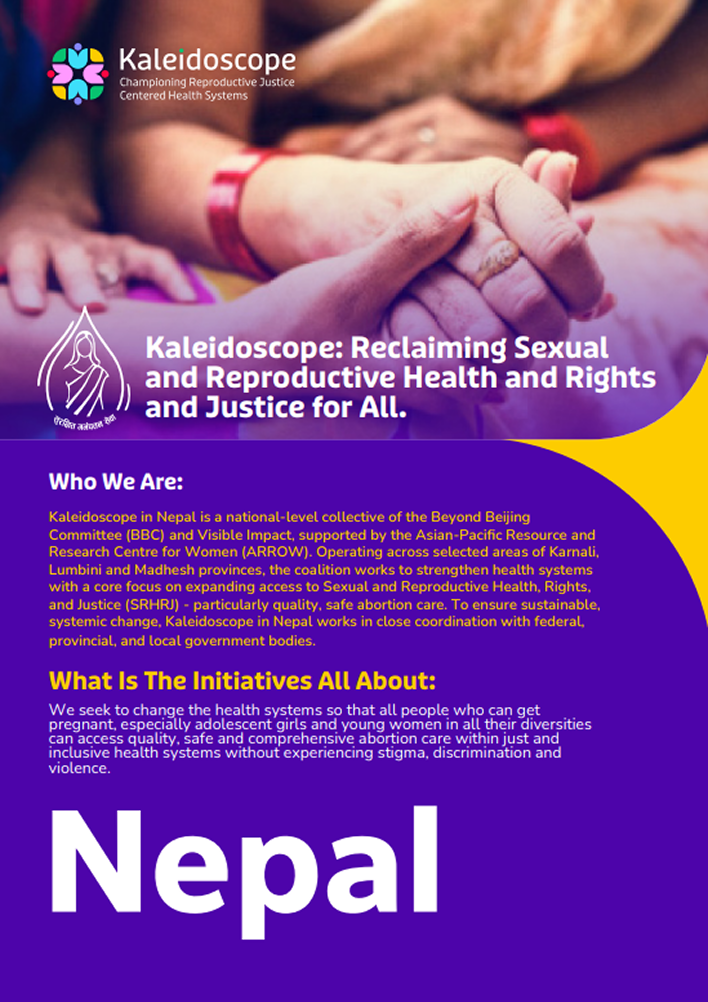
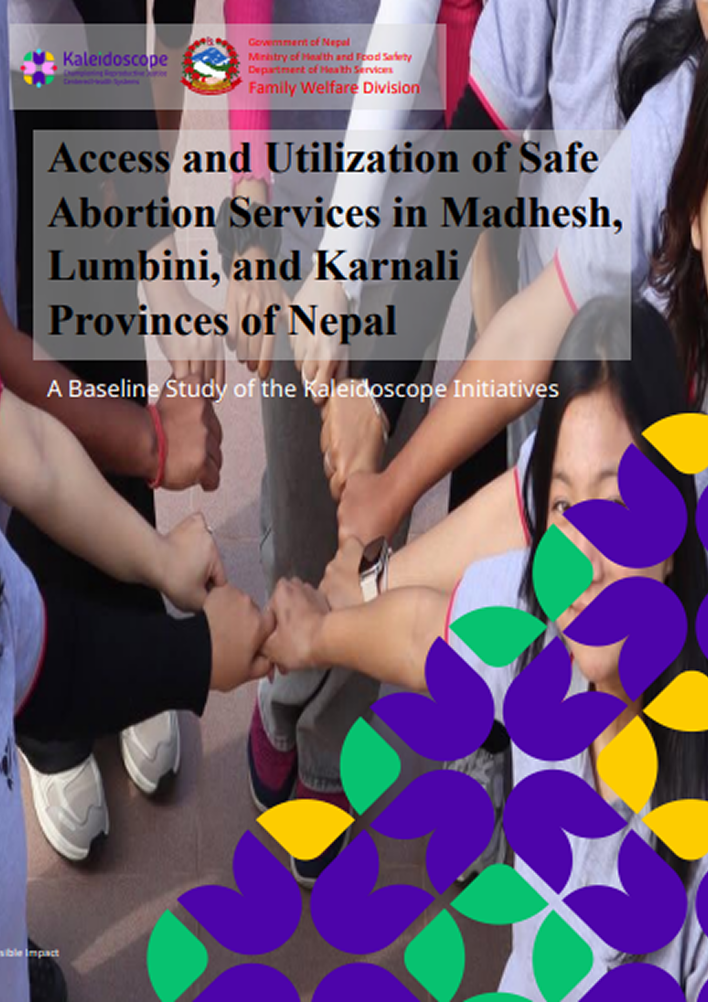
Although Nepal legalised abortion in 2002, significant disparities in access to service persist. Certified service providers and approved service sites remain disproportionately concentrated in Kathmandu, the capital city, creating substantial barriers for women and girls in provinces like Madhesh, Lumbini, and Karnali. They remain among the most marginalised and underserved in the country, travelling long distances for care they are legally entitled to. Persistent stigma, limited knowledge and awareness of legal rights among both health care providers and communities, and underutilised local government budgets all compound the gap between law and lived reality.
Our work
Kaleidoscope works across all three tiers of government – federal, provincial, and local – to expand certified service sites and providers, integrate gender transformative values clarification and attitude transformation training into existing government capacity-building systems, and advocate for dedicated budget allocations for safe abortion. We are building pools of master trainers with a multiplier effect on local providers, and developing digital information materials tailored to diverse identities, including young people and persons with disabilities.
Our vision
Our partners — Visible Impact and Beyond Beijing Committee (BBC) — have networks spanning all seven provinces. By 2028, we aim for at least 50 percent of women of reproductive age in Madhesh, Lumbini, and Karnali to access safe, stigma-free services, and for 60 percent of local health care providers to adopt progressive values around abortion care.